Guides · metro Atlanta
Why Atlanta basements and crawlspaces stay damp — and the fix sequence that works
A huge share of metro Atlanta's mold and musty-house calls start below the main floor — in basements on the north side of the metro's hills, and in the crawlspaces under intown bungalows. That's not bad luck; it's physics plus local geology. The Piedmont gave Atlanta housing its below-grade spaces, Georgia clay gave them their water problem, and the region's humidity does the rest. Here's what's actually happening under your floor, and the fix order that works instead of recycling the problem.
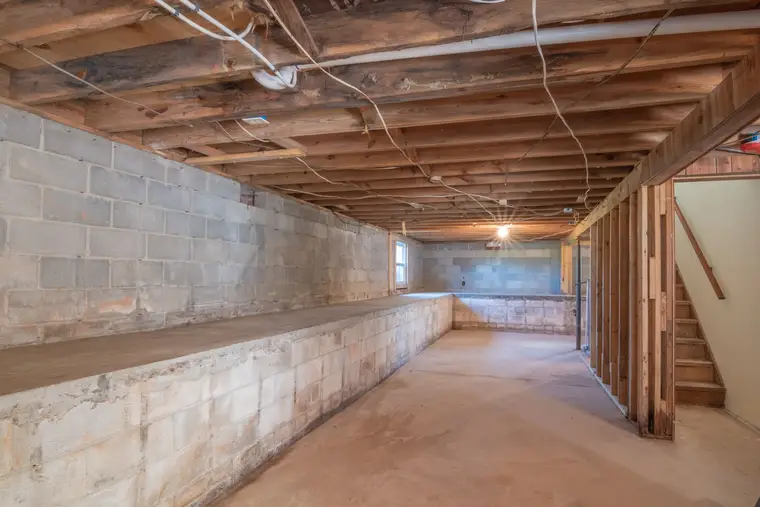
Why the lowest level runs damp here
- Red clay drains at the house. Saturated Georgia clay sheds water along its surface, and on a sloped lot that surface flow aims at the downhill foundation wall. The basement doesn't leak so much as the yard delivers.
- Below-grade rooms run cool — and cool surfaces condense. Summer air at Atlanta humidity touching a 65-degree slab or masonry wall drops its moisture right there. That's the damp smell in a basement that has never "flooded."
- Vented crawlspaces work backwards in this climate. The old code logic was that vents dry a crawl; in a humid Southeast summer they feed it — warm wet air condensing on cooler joists, ducts, and pipes all season.
- Deep shade slows everything. The canopy that makes intown neighborhoods livable also keeps soil and siding from drying between rains.
- Gutters and grading built for a gentler century. Under many older metro homes, downspouts still dump inches from the foundation of a house that's been settling since Roosevelt.
The upstairs symptoms people explain away
- A musty note that's strongest when the AC starts — air from the crawl or basement gets pulled up through floor penetrations and returns.
- Hardwoods cupping at the edges: moisture arriving from below, not from spills above.
- Doors that stick every summer and free up every winter.
- Indoor humidity that stays high no matter how the thermostat is set.
- Insulation sagging or dropping under the floor — wet fiberglass gives up and lets go.
- In basements: efflorescence (white mineral bloom) on masonry, rusting appliance feet, cardboard boxes that feel cool and soft.
The fix sequence — order is everything
Money spent out of order gets spent twice. Sealing or finishing a space that still receives bulk water just hides the problem behind better materials. If growth is already established down there, removing it properly belongs between steps one and three — after the water is controlled, before anything gets closed back up. The order that holds:
- 1. Bulk water first: extend downspouts well away from the foundation, clean gutters, correct grading so the first ten feet fall away from the house, fix plumbing drips. Cheap, unglamorous, and half the cure.
- 2. Ground vapor barrier in crawlspaces: heavy poly, lapped and sealed over the soil, shuts down the constant vapor rising off Georgia dirt.
- 3. Manage the air: in this climate that usually means sealing the crawl or basement from outdoor air and running dehumidification to a target instead of venting to the weather.
- 4. Then remediate what grew: joists, subfloor, and masonry with growth get cleaned and treated after the space is dry — treat first and it returns on schedule.
- 5. Keep score: a $15 hygrometer on the wall. Below about 60 percent relative humidity is the commonly cited line that keeps mold uninterested; below 50 is better.
When it has crossed into remediation
Visible growth across framing or masonry, insulation coming down damp, a sump that runs after every rain, standing water seasons, or an upstairs musty smell that keeps strengthening — that's past prevention. At that point the space needs assessment, controlled drying, containment, and treatment, in that order, with the water-path fix written into the same scope. It's among the most common jobs we run, under 1920s Decatur bungalows and 1990s Cobb subdivisions alike — the address changes, the physics doesn't.
About Chattahoochee Restoration — 24/7 water, fire, mold & storm damage restoration across Atlanta, Sandy Springs, Marietta, Decatur, and the rest of metro Atlanta (Fulton, DeKalb & Cobb counties, Georgia). On-site assessment in writing before any work starts, and insurance-ready documentation on every job. Emergency line: (678) 247-2393.
Dealing with this now in metro Atlanta?