Guides · metro Atlanta
What does fire damage restoration cost in Atlanta? (2026)
Fire restoration pricing has a wider spread than any other work we do, because "a fire" ranges from a scorched microwave wall to a structure open to the sky. Almost every real fire loss in Atlanta runs through an insurance claim, so the useful question is less "what's the sticker price" and more "what drives the scope my adjuster and contractor will negotiate." Here are the honest bands as general published ranges — every real number comes from a walked scope, in writing.
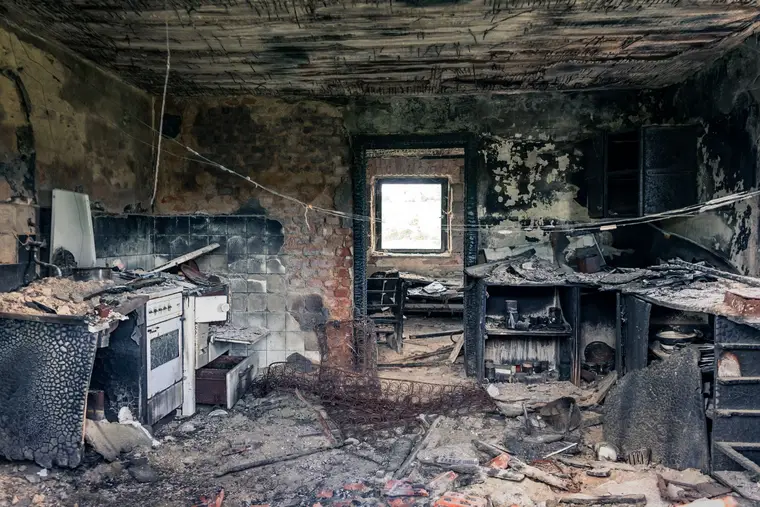
The bands, as published ranges go
Insurance-scale numbers are normal here — this is why fire claims are the highest-stakes property claims most homeowners ever file, and why documentation quality matters so much.
| Situation | Typical range | What's in the scope |
|---|---|---|
| Light smoke and soot, one area, no structural damage | ~$2,000 – $8,000 | Residue cleaning, odor treatment, contents |
| Single-room fire with contents, odor, and some rebuild | ~$10,000 – $30,000 | Tear-out, cleaning, drying, odor, rebuild |
| Multi-room or structural fire | $50,000 – six figures | Full mitigation through reconstruction |
What actually drives the number
- How far the smoke traveled — soot follows air currents and ductwork, so a contained kitchen fire can still mean cleaning and deodorizing most of the house.
- What burned. Synthetics and plastics leave a greasy, smeary residue that's slower to clean than dry soot from wood; kitchen protein fires leave a film with a stubborn odor all their own.
- The water share. Everything the hoses soaked needs extraction and verified drying — in a big fire, the water scope can rival the fire scope, and skipping it trades a known cost now for a mold problem later.
- Contents. Pack-out, specialized cleaning, storage, and the replace-versus-restore call on every item — a huge, often underestimated share of real fire claims.
- Odor scope. Real deodorization treats sources — residue on structure, inside cavities, through the duct system. The wider the smoke went, the bigger this line.
- Rebuild scope and finishes — the difference between patch-and-paint and re-running a kitchen is self-explanatory.
How the insurance mechanics work on fire claims
Fire is a core covered peril on standard homeowners policies — dwelling coverage rebuilds the structure, personal-property coverage handles contents, and additional living expenses (ALE) pays for temporary housing while the home is uninhabitable. The process that protects you: document the full loss before cleanup, insist the firefighting-water damage is written into the same scope as the fire damage, and keep every emergency receipt from board-up onward. Large-loss claims are negotiations between your contractor's scope and the adjuster's — thorough, line-item documentation is what closes gaps in your favor.
Judging bids when the numbers are this big
- A serious bid follows a walked inspection and reads like a scope — securing, drying, cleaning method per surface type, odor plan, contents plan, rebuild — not a single round number.
- "We'll just repaint it" over soot is the classic false economy: residue bleeds through paint and the odor stays. Cleaning comes before coatings.
- If a bid doesn't mention drying the firefighting water, the bid is incomplete — full stop.
- Be slow with door-knockers and assignment-of-benefits forms in the first shocked days. Compare, verify, and keep control of your own claim.
About Chattahoochee Restoration — 24/7 water, fire, mold & storm damage restoration across Atlanta, Sandy Springs, Marietta, Decatur, and the rest of metro Atlanta (Fulton, DeKalb & Cobb counties, Georgia). On-site assessment in writing before any work starts, and insurance-ready documentation on every job. Emergency line: (678) 247-2393.
Dealing with this now in metro Atlanta?